
General Construction in Philadelphia: One Contractor for the Whole Job
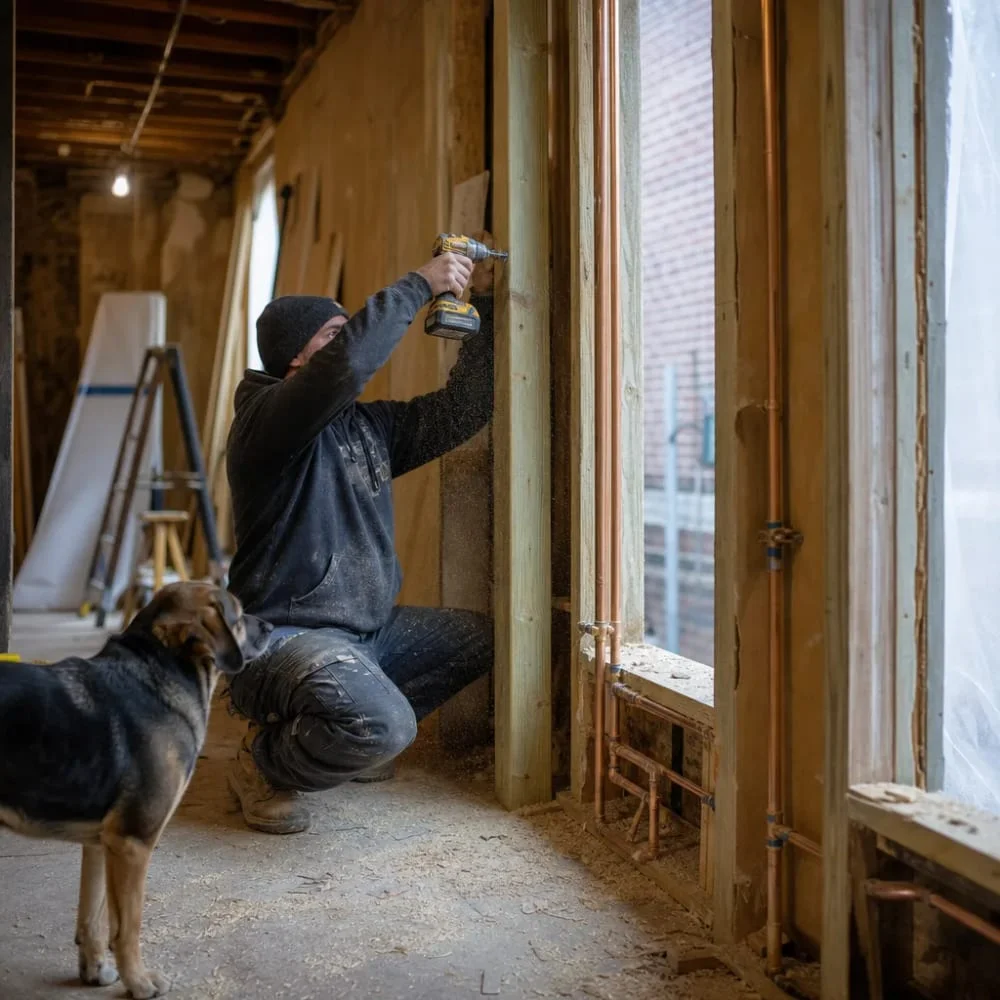
A multi-trade renovation project underway in a Philadelphia rowhome requires coordinated framing, electrical, and plumbing work.
Deciding Between a General Contractor and a Single Trade
Here's the simplest way to think about it. Count the trades your project needs, then ask who will make sure they show up in the right order.
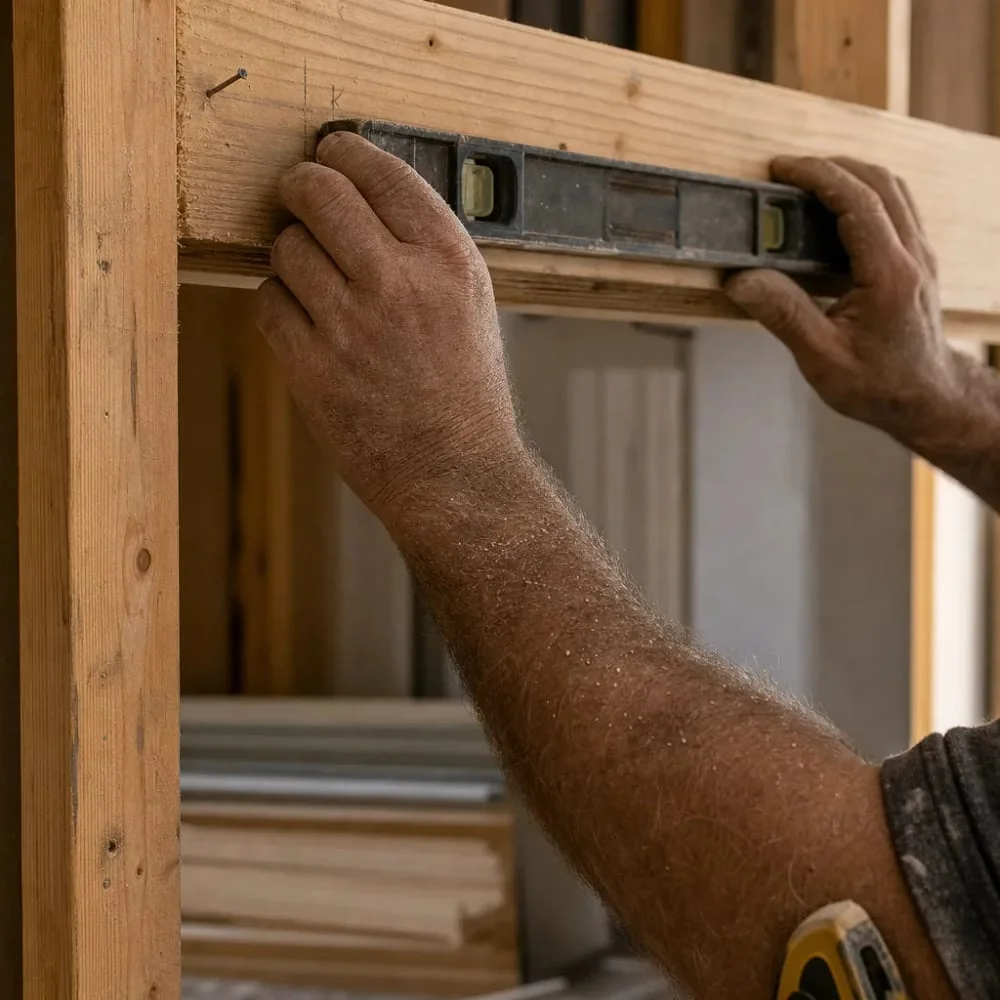
A dripping faucet is a plumbing job. A dead outlet is an electrical job. A small patch on a wall is drywall work. For any of those, you don't need a general contractor to step in. You need one skilled person, and that's it.
Now picture a bathroom remodel. The old tile and fixtures come out first. Then pipes may need to move, and wiring may need updating for new lights or a fan. After that, the walls get closed up, then tile, paint, and fixtures go in. Each step depends on the one before it. If the plumber runs late, the drywall crew can't start. If the walls get closed before the electrical work is checked, someone may have to open them back up.
That handoff between trades is where projects usually stall. When you hire each trade yourself, you become the scheduler, the go-between, and the person who sorts out who's responsible when something doesn't line up. That's a lot to take on while you're also trying to live in the house or keep a rental filled.
A general contractor takes that job off your plate. You talk to one point of contact about the whole project, from tear-out to final touches. At Affinity Contractors Inc., our team handles demolition, concrete work, electrical work, plumbing, carpentry, and drywall, so many of those handoffs stay inside one team instead of passing between strangers.
- A single trade usually makes sense when the problem sits in one system, like a leaky pipe, a tripped circuit that won't reset, or a cracked section of drywall.
- A single trade also works when nothing else gets opened up or rebuilt around the repair.
- A general contractor makes sense when walls, floors, or ceilings will be opened and then closed again.
- A general contractor also makes sense when two or more trades have to work in a set order.
- It's a good fit when the work may need permits and inspections at more than one stage.
- It's the right call for a full rehab, an addition, a basement finish, or a kitchen or bathroom remodel.
- It's especially helpful when you're a landlord or investor who can't be on site every day to manage crews.
Philadelphia's older homes add another reason to plan carefully. When you open a wall in an older rowhome, you may find old wiring, aging pipes, or framing that needs attention. That can turn a one-trade job into a three-trade job overnight. A contractor who can handle what turns up keeps the project from stopping while you hunt for another crew.
If you're not sure which side your project falls on, that's normal. Describe what you want done and what you're seeing. The answer usually becomes clear once someone looks at the space in person.
Signs Your Project Needs Full General Construction
Some projects tell you they're bigger than a repair. You don't need a tape measure or a building degree to notice. Here are the signs that point to full general construction instead of a quick fix.
The problem goes past the surface. A crack in paint is cosmetic. A crack that keeps growing, a floor that feels soft or bouncy, a ceiling that sags, or a door that suddenly won't close can all point to something underneath. That's framing, joists, or a foundation asking for attention. Patching the surface won't hold if the structure behind it is moving. Structural repairs usually mean opening things up, fixing the support, and then rebuilding everything you see.
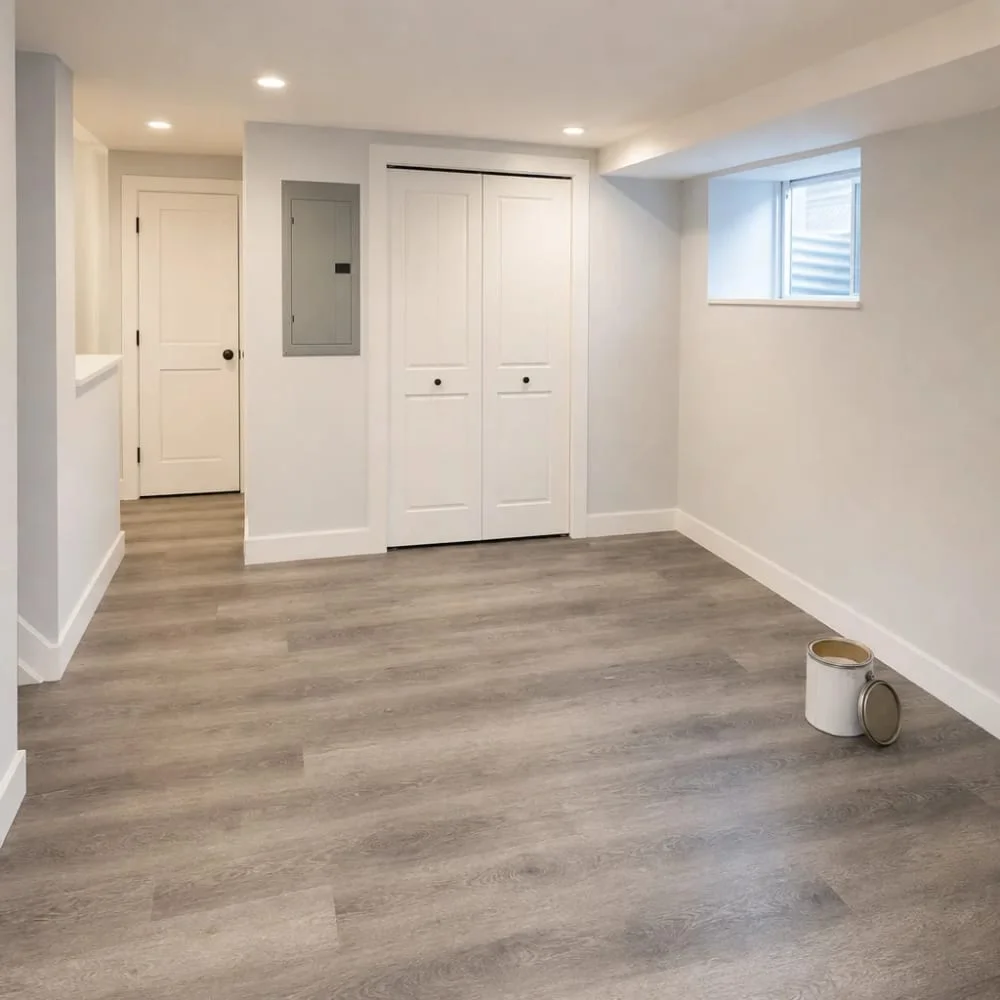
Water got somewhere it shouldn't. One wet spot under a sink is a plumbing call. Water stains spreading across a ceiling, warped floorboards, or a musty smell in a basement are different. Water travels. By the time you see it, it may have soaked drywall, insulation, and subfloor in more than one room. Fixing the leak is step one. Tearing out the damaged material and putting the space back together is the bigger job.
You want the space to work differently. Moving a wall, opening a kitchen to the dining room, or relocating a bathroom isn't a cosmetic change. Walls can carry weight, and they often hide pipes and wires. In a rowhome, a shared wall with your neighbor adds another reason to plan before anything comes down.
You're adding space. Home additions, basement finishing, and deck building all create something that wasn't there before. That usually means framing, concrete work, electrical, and finishes, often with permits and inspections along the way.
The property needs everything. Landlords and investors know this one. A vacant house might need demolition and debris removal, new plumbing and wiring, drywall, flooring, kitchen and bath work, and paint before anyone can live there. That's a full rehab, and piecing it together one trade at a time can drag on for months.
A commercial space is changing hands. A new tenant often needs walls moved, lighting changed, and surfaces redone. Commercial renovation is general construction with a business deadline attached.
Your DIY project stopped making sense. You pulled up the old flooring and found rotted subfloor. You took down a cabinet and found old wiring behind it. That moment when a weekend job turns into questions you can't answer is a clear sign to bring in help.
- Cracks, sagging, or soft spots that are getting worse
- Water damage that reaches more than one surface or room
- Walls, rooms, or fixtures you want to move
- New square footage, from an addition to a finished basement
- A vacant or neglected property that needs a full rehab
- A commercial space being renovated for a new use
If one or more of these fits, it helps to work with a general contractor like Affinity Contractors Inc. Our team handles demolition, concrete, carpentry, electrical, plumbing, and finish work. We've been doing this since 1992 as a licensed and insured contractor serving Philadelphia, along with Bucks, Montgomery, and Delaware counties. An on-site look is the fastest way to know how deep the work really goes.
Families can rely on the experienced Affinity Contractors Inc. team for practical planning guidance and careful answers.
When You Don't Need a General Contractor
Not every project needs us, and we'd rather tell you that up front. Plenty of work around a Philadelphia home or rental is small enough, simple enough, or early enough that hiring a general contractor would just add cost and steps you don't need.
You can probably handle it yourself when the work stays on the surface and nothing gets opened up. These jobs are good examples:

- Painting a bedroom or touching up trim
- Swapping out cabinet knobs and pulls
- Re-caulking a tub or a kitchen sink
- Adding weatherstripping to a drafty door
- Hanging shelves, curtain rods, or a new mirror
If you're handy and have a free Saturday, there's no reason to pay someone to manage a job like that. Nothing needs to be scheduled around it, and nothing behind the wall is at stake.
You should wait if you don't know what you want yet. A contractor can only price and plan a project with a clear scope. If you're still deciding between a full kitchen remodel and just new counters, take some time first. Walk through the space. Write down what bugs you about it. Figure out roughly what you're willing to spend. You'll get a far more useful conversation and quote once you know whether you're fixing a problem or changing how a room works.
Some projects need another step before any builder can help. Big changes, like a new floor plan or added square footage, may need drawings from an architect or engineer before work can be priced. If you live in a condo or a building with an association, you may need its approval before anything starts. Getting those pieces in place first saves you from paying for plans or quotes that have to be redone.
If you rent, call your landlord, not a contractor. Repairs and changes to a rental usually belong to the owner. Hiring someone on your own can create problems with your lease. Let the owner decide who does the work.
You may not need the whole job done at once. Say you're planning to sell soon and a buyer will likely redo the kitchen anyway. A full remodel may not pay you back. A few honest repairs and a fresh coat of paint might be the smarter move. The same goes for a rental between tenants that only needs cleanup and small fixes.
Here's a simple test. Will this job open a wall, floor, or ceiling, move something, or need more than one kind of skilled worker? If the answer is no, you likely don't need a general contractor. If you're unsure, that's fine. It's better to ask a quick question than to start a project bigger than it needs to be.
What to Verify Before Hiring a Contractor
Once you know you need a general contractor, the next job is picking the right one. A few plain questions will tell you a lot. A good contractor won't mind answering any of them.
Start with the basics. Ask whether the contractor is licensed to work in Philadelphia and carries insurance. Then ask for proof. A copy of the insurance certificate protects you if someone gets hurt on your property or something gets damaged during the work. If a contractor gets vague here, move on.
Next, ask who handles permits. In Philadelphia, permits and inspections run through the city's Department of Licenses and Inspections. Many jobs that open walls, move plumbing, change wiring, or add space need them. You want a contractor who pulls the permits and schedules inspections, not one who asks you to do it or suggests skipping them. Unpermitted work can cause trouble when you sell, refinance, or rent the property.
Then look closely at how the price is built. Contractors usually quote a job in one of two ways:
- Fixed price: one number for a clearly defined scope. It's easier to budget, but anything outside that scope becomes extra.
- Time and materials: you pay for labor hours plus materials. It's flexible when the full scope isn't known yet, but the final number can move.
Either way, the things that push cost up are the same. Bigger scope, more trades, permits, and surprises behind the walls all add to the total. In older rowhomes, hidden problems are a real possibility, as we covered above. So ask how the contractor handles a change once work starts. You want any new work written down and approved by you before it's done, not added to the bill afterward.
Get everything in writing. A clear contract should spell out the scope, the materials, the payment schedule, and who's responsible for cleanup and debris removal. If two quotes look very different, compare what each one covers. The lower number sometimes leaves things out.
Ask who your contact will be. On a job with several trades, you should know exactly who to call when you have a question and how often you'll get updates. One point of contact saves you from chasing three different crews for answers.
Last, check availability. If a contractor advertises emergency response, ask what that means in practice. Affinity Contractors Inc. lists 24-hour availability, seven days a week. Call and confirm what we can do for your situation.
Here's how we answer those questions. Affinity Contractors Inc. is a licensed and insured general contractor that's been working since 1992. We're a BBB Accredited Business with an A+ rating, as listed on our website. You'll have one point of contact for demolition, concrete, carpentry, electrical, plumbing, drywall, and finishes. We serve Philadelphia, plus Bucks, Montgomery, and Delaware counties.
Ready to talk about your project? Call us at (267) 939-6044 or request a free quote, and we'll set up an on-site look so you know exactly what the job involves before you decide.
Permits and Philadelphia's L&I Process
A permit isn't just a piece of paper you get before work starts. In Philadelphia, it shapes the order of the whole job. Inspections happen at set points, and some work can't move forward until an inspector signs off. That's one more reason a project with several trades runs better when one contractor keeps track of every step.
It helps to know there are two kinds of approval. A building permit covers how the work is done, like framing, wiring, plumbing, and fire safety. Zoning covers what the property is allowed to be and how big it can get. Changing a building's use, adding a unit, or building out or up can raise zoning questions before any building permit is issued. If your plan changes the size, use, or number of units, ask about zoning first. It's often the slower piece.
Once work begins, inspections follow the job as it's built. Here's how that usually plays out on a remodel or rehab:
- Rough work goes in first. New pipes, wiring, and framing are installed while the walls are still open.
- An inspector checks that rough work before anything gets covered. Drywall waits until then.
- Walls close, and finishes like tile, flooring, cabinets, and paint go in.
- A final inspection closes out the permit once the work is complete.
This is why timing matters so much. If an inspection gets missed or fails, the drywall crew can't start, and every trade behind it waits. Ask any contractor how they plan the schedule around inspections, not just around their crews.
Philadelphia's older housing adds a few wrinkles. Many blocks are lined with rowhomes that share a wall with the house next door. Work on or near that shared wall, or on the roof line, can affect your neighbor's home too. It's worth talking with your neighbor before demolition starts. Some neighborhoods also sit in historic districts. If your home is in one, or is listed on its own, exterior changes like windows, doors, porches, or siding may need review by the Philadelphia Historical Commission before work starts. Check this early, because it can change what materials you're allowed to use.
Landlords and investors have one more reason to care. A rental that's been fully rehabbed should have its permits closed out before tenants move in. Open permits can hold things up when it's time to rent, sell, or refinance, as we mentioned earlier.
Keep your own records, even if your contractor handles the filing. Here's what's worth saving:
- A copy of each permit and the permit number
- Any approved drawings or plans
- Inspection results, especially the final sign-off
- Zoning or historic approvals, if your project needed them
These papers prove the work was done the right way. A buyer, lender, or insurance company may ask for them years from now. Keep them in one folder, and you won't have to track anything down later.